Introduction
Restaurants in Japan offer a wide array of dishes that cater to different budgets and tastes, resulting in a highly diverse culinary landscape. Next to dining places that offer typical Japanese dishes, such as sushi, soba, and udon, restaurants offering Western-style food, such as hamburgers and ethnic European cuisine, have firmly occupied a position in people’s dining out habits. While the broader restaurant industry, valued at roughly $227bn, has shown limited expansion since 2018, fast food chains emerged as standout performers, consistently recording annual sales increases of more than 7%. What explains the resilience of this segment in an otherwise mature and slow-growing industry?
High population density in metropolitan areas, paired with a promising socio-economic situation, made Japan an early target for the expansion ambitions of the largest American fast food restaurant chains in the world, which entered Japan at the beginning of the 1970s. As of January 2026, McDonald’s [NYSE: MCD] was the leading fast food restaurant chain in Japan in terms of facilities. Other fast food restaurant chains of foreign origin, such as KFC and Domino’s [NASDAQ: DPZ], have also recorded an extraordinary upward trajectory and are likewise firmly established in the Japanese market. Today, these well-established players operate within a market that is increasingly drawing the attention of private equity investors, and recent transactions highlight this momentum. In 2024, Carlyle Group [NASDAQ: CG] acquired the Japanese operations of KFC for ¥135bn (~$835m). A year after, Goldman Sachs’ [NYSE: GS] private equity division purchased Burger King’s Japan operations for ¥70bn. Meanwhile, Wendy’s Japan [NASDAQ: WEN] is also attracting investor interest, with Longreach Group reportedly exploring potential offers.
What Draws Private Equity to Fast Food
Private equity’s appeal in Japan’s fast food sector is not simply about riding a growth story. It reflects a specific convergence of macro shifts, structural undervaluation, and business model characteristics that make fast food an unusually clean fit for the buyout playbook.
The macro picture has shifted in a way that helps limited-service operators directly. Japan spent close to three decades stuck in deflation, and that era is now over. The Bank of Japan ended its negative rate policy in March 2024, and the 2025 and 2026 shunto (“spring wage offensive”) wage rounds delivered base pay increases of roughly 3.4 to 3.75% per year, by far the strongest sustained wage growth in a generation. For fast food this works in two directions at once. Labor costs are climbing in a market that already faces a structural shortage of somewhere between 6.7m and 11m workers by 2040 (METI estimates), and that pressure is precisely what accelerates the rollout of self-service kiosks, automated kitchen equipment and delivery robotics across chains. At the same time, fatter wage packets feed straight into consumer spending, and fast food sits at the price point that picks up disproportionate volume when households gain even modest breathing room. A meal at a chain counter is cheap enough to count as an affordable treat in a tight month, and visited often enough that small per-visit wins compound across a multi-year hold. Counterintuitive on the surface, but precisely the asymmetric setup buyout sponsors look for when underwriting a thesis that has to play out over five to seven years.
Demographic change reinforces the structural case. Japan’s population is declining at roughly one million people per year, and the rise of single-person households and dual-income families has fundamentally reshaped meal patterns. Working hours in the service sector rose 3.2% in 2024 alone, and commuting schedules are increasingly irregular under hybrid work arrangements. Consumers in that environment are not choosing between McDonald’s and a sit-down kaiseki dinner. They are choosing between McDonald’s and a convenience store. The relevant competitive set is not the full restaurant market but the grab-and-go market, which is growing at a 10.74% CAGR through 2031, and chain fast food is well-positioned to take share from convenience stores on value, customization, and brand familiarity.
Western chains running through master franchise agreements in Japan throw off royalties and fees that hold up well regardless of how any individual store is doing on a given week. Once the early build-out is largely behind, that cash flow is steady and not particularly capital-hungry to maintain, which is exactly the profile that makes a leveraged buyout structure work and keeps multiple exit paths open down the line, from a public listing to a strategic sale back to the global franchisor. There is also a more concrete operational angle that helps explain why these assets keep clearing buyout committees. Bernstein and Sheen (2016) tracked PE buyouts of U.S. restaurant chains using health inspection records as a granular operational proxy and found a clean drop in violations after deals closed, with the effect concentrated in directly owned stores where the sponsor has the authority to push changes through. The improvements were strongest where the lead PE partner brought genuine prior restaurant experience, which points to operational know-how rather than financial engineering as the real driver of value creation. That finding carries particular weight in Japan, where consumers hold food quality and service consistency to an exceptionally high bar; a sponsor that can lift store-level execution stands to capture both margin gains at each location and brand equity benefits across the wider network.
Competition within the segment is real but not homogenizing. McDonald’s operates roughly ten times more outlets in Japan than Burger King, and the convenience store chains represent a formidable and deeply ingrained alternative for quick meals. Yet certain Western brands have shown that perceived loyalty and differentiation can sustain a premium positioning even against this backdrop. Burger King’s average unit volumes in France reach $3.8m per location, compared to roughly $400,000 for its China stores, a gap that demonstrates how much execution and brand-building matter within the same global franchise system. Japan sits closer to the high-performing end of that spectrum in terms of consumer expectations for quality, which means a sponsor with the operational rigor to meet that bar can extract premium economics from a market that looks, on paper, like it should be commoditized.
PE deal activity in Japan overall jumped 40% in volume and 60% in value in 2024, reaching $12.8bn, and deal values in Japan’s consumer sector rose a further 24% to $23bn in 2025. Within that broader wave, consumer and food assets have been a consistent focus, with cross-border buyers drawn partly by weak yen dynamics that have improved relative valuation for dollar-denominated investors. Fast food, sitting at the intersection of consumer growth, operational improvement potential, franchise-model predictability, and brand-building upside, has concentrated more deal activity per sector dollar than almost any other consumer sub-segment in the country.
Limits and Risks of the PE Model in Fast Food
The private equity “slash-and-burn” approach has been applied time and time again across the fast food industry, proven to be replicable and, in many cases, a financial success story. An acquirer will seek out a brand with structural cost inefficiencies, apply aggressive rationalization, and drive EBITDA expansion ahead of exit. 3G Capital’s 2010 acquisition of Burger King is the canonical example. Upon taking control, 3G implemented a radical transformation that has been taught in business school classrooms as the “3G Operating System.” It involved zero-based budgeting that required every department to justify every expense from scratch, and more controversially, cutting corporate headcount from 800 to fewer than 300 in just one year, among other changes. Within three years, they refranchised more than 1,300 company-owned locations and shifted all capital expenditures onto independent franchisees. The number of company-owned stores fell from 1,300 to 52, resulting in a +32% in EBITDA growth and a 14x EBITDA valuation multiple following the turnaround in 2013. It repositioned Burger King to be a royalty collector rather than a restaurant operator by collecting a high 4-6% royalty on systemwide sales. Focusing almost exclusively on margin expansion, 3G deferred customer innovation for over a decade. Noticing the understaffed kitchens and stale products during this period, customers reported a steady quality decline and often described the brand as the “K-Mart of fast food”. While cost reductions improved numbers in the near term, they generated brand debt that manifested itself in deteriorating food quality, service consistency, and store environment.
In Japan, this risk is magnified by the high standards of omotenashi, used to describe a form of hospitality oriented toward anticipating the guest’s needs rather than merely satisfying them. Its applications extend well beyond formal dining and into the cleanliness and responsiveness of staff interactions in everyday fast food settings. There has been an effort led by private equity firms to automate chains with kiosks and autonomous delivery robots, given the growing labor costs across the nation. In October 2025, the weighted average minimum wage reached ¥1,121, a 6% increase and the largest hike since the hourly system was established in 2002. And it will continue to rise, as shown by the government’s target of ¥1,500 by the late 2020s, implying compound annual increases of roughly 7.3%. In a market where service quality is a core component of the product, substitution of human interaction risks eroding customer satisfaction that is not easily restored once lost.
Moreover, unlike the U.S., where suburban drive-throughs dominate, Japanese Quick Service Restaurants (QSRs) rely on expensive urban leases. Many quick-service chains operate in high-traffic areas, concentrated around railway hubs and controlled by operators such as JR East [TSE: 9020], Tokyu Corporation [TSE: 9005], and Keio Corporation [TSE: 9008]. They are “ekichika” (near-station) leases, whose selection process favors long-established tenant relationships over new partners. Entry deposits for prime locations regularly require 6-10 months of rent, locking ¥30–60m of capital per site that is only partially recoverable at exit. Japan’s lease termination practices also limit portfolio rationalization, the process of exiting underperforming assets to reallocate resources toward higher-return projects. Japan’s Land and Building Lease Act also requires eviction fee negotiations, typically producing settlements of ¥20–50m per site and timelines of one to two years. For a PE-backed operator in a fixed hold period, this is structurally debilitating. The result is a prisoner of its own footprint: capital locked in underperforming sites that are too expensive to exit and too neglected to grow.
Lastly, Japan’s transition out of deflation has exposed a structural weakness in the private equity approach to fast food. Food inflation in Japan hit a record-high 3.6% back in March 2026, driven by supply chain disruptions and a historically weak yen. While the figure may be modest by global standards, it’s a departure from the consistent value that Japan’s fast food culture was founded on. PE-backed brands are notoriously aggressive with price increases and portion reduction to satisfy shareholder demands. However, Japanese consumers have hit a price ceiling paired with a disdain for shrinkflation. And with the wide availability of convenience stores, Japanese consumers readily compare against lower-priced options and adjust accordingly. In this environment, efforts to protect margins increasingly undermine the demand they intend to sustain.
Operational Transformation Under PE
Private equity firms often buy businesses with a well-thought-out strategy beforehand to improve the company. Japanese fast food is no exception to that rule. There are a few interesting trends when it comes to private equity investments in Japan’s fast food industry. One of these trends is creating a digital ecosystem with AI-driven data analysis. Today, in the Japanese market, a mobile application is no longer a choice but an operational must. Private equity owners give priority to the development of digital ecosystems to strengthen direct relationships with diners, bypassing third-party delivery platforms that traditionally capture a significant portion of the margin. This digital ecosystem then gets integrated with the latest technology such as AI. Global brands such as Yum Brands [NYSE: YUM] are increasingly using in-house technology that uses digital ordering, smart operations, and data-driven management. For instance, Yum Brands’ Byte by Yum platform uses machine learning to optimize sales forecasts and inventory management, addressing two big challenges of any restaurant: food waste and stockouts. By analyzing thousands of data points, including historical order volume, seasonal trends, and even localized weather patterns, AI systems can achieve greater forecasting accuracy than before. This great precision allows restaurant managers to adjust staffing levels and inventory procurement in real-time, enhancing operational performance. Beyond that, AI is increasingly used for things such as customer service, further cutting down costs. PE firms are adopting similar strategies when it comes to fast food restaurants.
Another Japanese particularity is its demography, consisting of a quickly aging population. This shrinks the labor pool and challenges the traditional restaurant model, which relies upon large amounts of labor. Private equity firms have responded by investing heavily in the Japan AI culinary robots’ market, which could replace cheap labor needed for simple food handling and cooking tasks. Robots also manage to automate tasks that are traditionally considered dangerous or dirty. In the context of fast food chains, robotic arms and conveyor systems are being integrated to handle vegetable chopping, grill flipping, and ingredient assembly. These systems also come with the benefit of ensuring a level of consistency and precision that is difficult to maintain with a human workforce.
Private equity firms also focus on a shift towards asset-light business models, which rely on franchising more so than direct store ownership. This strategy is exemplified by firms like Restaurant Brands International [NYSE: QSR], which aims to become a 99% franchised business. By shifting the capital-intensive burden of store construction and maintenance to third-party franchisees, the parent company can focus on high-margin activities such as brand development, digital innovation, and supply chain management. This model is particularly relevant for Japan. Japan consists of many secondary and tertiary cities where the (often international) brand may be under-penetrated, hence presenting an opportunity for growth. The franchise model also relies upon the local franchisee, which has more knowledge about local particularities than the restaurant’s headquarters or the private equity firm. This is particularly important for Japan which, like Italy, has many local traditions and culinary diversity. The disadvantages for franchisees managed by a private-equity-led chain are increased royalty fees and stricter compliance requirements for franchisees, as the private equity owner seeks to maximize brand value, which may allow for greater growth and higher exit multiples.
Goldman Sachs and Burger King Japan
Recent transactions in Japan’s fast food sector provide a clearer view, revealing how private equity strategies translate into real-world outcomes. In November 2025, Goldman Sachs secured exclusive negotiating rights from Affinity Equity Partners, the Hong Kong-based fund that had held the Burger King Japan master franchise since 2017, to acquire the chain’s Japanese operations in a deal valued at approximately ¥70bn (~$450m). The transaction marked Goldman’s most significant principal investment in Japan’s consumer sector in over a decade. The bank had previously taken a stake in Burger King’s U.S. operator in the early 2000s, giving the deal an element of strategic continuity that went beyond opportunistic positioning.
The asset Goldman was acquiring had already undergone a meaningful growth phase under Affinity. Burger King Japan operated just 77 branches nationwide in May 2019; by the time Goldman entered exclusive negotiations, that figure had reached 308, a fourfold expansion in six years achieved through a rollout concentrated in major urban centers. The chain’s stated plan is to reach 600 branches by the end of 2028, implying roughly a doubling of the current network over three years. That trajectory is the core of the investment thesis. Goldman is not buying a turnaround or a restructuring story. It is buying an already-functioning growth platform and providing the capital and operational infrastructure to sustain the next phase of expansion, which will require moving beyond the dense urban locations where Affinity built the initial base and penetrating suburban and secondary markets where brand recognition is lower and logistics more complex.
The deal sits within a broader restructuring of Restaurant Brands International’s Asian asset base. In the same month, RBI agreed to sell an 83% stake in Burger King China to Chinese private equity firm CPE for $350m, retaining a 17% stake and a board seat. The parallel transactions reveal a deliberate strategy by the New York-listed parent to bring in strong local investors who can lead market-specific expansion, rather than managing these geographies centrally from North America. For China, the logic was clear: the market needed a locally embedded partner with both capital and on-the-ground market knowledge. For Japan, the logic is different. The market is not underperforming; it is underbuilt. Goldman’s role is to fund a store-count expansion that RBI’s franchised structure would not have generated at the same pace under a fund with a shorter hold horizon or a more passive ownership philosophy.
Goldman’s approach to the deal reflects how multi-functional the transaction is within the bank’s own institutional framework. The private equity arm structures and holds the asset; the leveraged finance desk builds the debt stack supporting the acquisition; and if the eventual exit takes the form of an IPO, the ECM desk is positioned to run that process. Consumer sector investment banking coverage provides advisory continuity and originates any add-on acquisitions that the expansion thesis might require, whether that means bolt-on franchisee consolidation within Japan or adjacent brand acquisitions within the Asian quick-service space. A 70-billion-yen consumer buyout pulls on all these capabilities simultaneously, which is precisely the kind of integrated transaction that justifies the resources Goldman has been committing to Japan’s deal market across consecutive fiscal years.
From an operational standpoint, the investment thesis will be tested most sharply in the suburban and rural rollout. Urban Japan has a well-established fast food culture and the foot traffic density to make individual unit economics predictable. The question is whether Burger King’s brand positioning, which has explicitly avoided competing on pure price and instead emphasized premium ingredients and limited-edition burgers like the Kyoto Whopper, translates into sufficient demand outside the major metropolitan areas. The brand’s track record in Japan under Affinity’s ownership suggests that consumers are willing to pay a premium for the differentiated product, but sustaining that positioning across a network twice the current size will require consistent operational quality. The Bernstein-Sheen research finding that PE-backed restaurants improve operational standards most durably when the sponsor brings genuine industry expertise and exercises direct ownership authority is directly applicable here. Goldman’s ability to attract partners with food service backgrounds and to maintain tight operational oversight of directly owned stores will be a meaningful determinant of whether the expansion delivers on its unit economics assumptions or dilutes them.
Carlyle’s Bet on KFC Japan
While Goldman’s strategy focuses on scaling an existing growth platform, Carlyle’s approach reflects a different angle. Carlyle Group completed the acquisition of KFC Holdings Japan in late 2024 for approximately ¥135bn ($835m), taking the company private and marking the end of a 54-year partnership between KFC Japan and Mitsubishi Corporation. Carlyle’s primary objective with KFC Japan was to unleash the untapped potential in the consumption patterns of its customers. Historically, KFC has occupied a unique cultural niche in Japan as a ‘special occasion’ meal, for instance during the Christmas season. While this has created strong brand loyalty and massive peak-demand events, it has also limited the brand’s presence in the everyday dining market. Carlyle intended to broaden the menu to include more snacks and cheap lunch bowls to attract office workers and students during lunch. Carlyle also planned to expand the store network by 30%, targeting 1,700 locations by 2030. An important element of this expansion is the development of larger and more spacious locations to accommodate guests during the day that want to sit down to eat. Perhaps more importantly, by acquiring KFC Japan alongside KFC Korea and the Korean cafe chain A Twosome Place, Carlyle has made significant progress in creating a pan-Asian food platform. This allows for the integration of supply chain logistics, shared digital technology development, and collaborative menu innovation across markets.
A primary pillar of the Carlyle strategy is the acceleration of digital transformation leveraging Yum! Brands Byte by Yum! platform. The forecasting systems reduce food waste and optimize inventory management (and thus working capital). The rollout of the new mobile app will further boost customer loyalty by using data analytics to offer personalized rewards. This strategy builds on previous successes, such as the Ebi Shrimp Puri campaign, which was a massive hit for the business. Carlyle is also focused on the installation of self-service kiosks and digital ordering platforms across the network. These tools are designed to reduce difficulty and time spent in the ordering process and boost efficiency across the restaurants.
Longreach and Wendy’s Japan
Not all strategies, however, have delivered as expected. When Longreach Capital Partners II acquired Wendy’s Japan and First Kitchen in June 2016, it was lauded as AVCJ’s “Best Private Equity Deal” for its innovative structure. Wendy’s had struggled to establish itself in Japan’s food industry, scaling to fewer than 20 locations in 5 years due to constrained access to real estate. Meanwhile, First Kitchen had spent the last 4 decades assembling 136 locations, making a name for itself through special menu offerings adapted to local tastes. Longreach’s insight was that acquiring First Kitchen addressed Wendy’s primary real estate problem in a single transaction. In a two-step acquisition, Longreach’s brownfield expansion allowed Wendy’s to bypass the “scout and secure” real estate bottleneck by inheriting 136 established locations.
However, the underlying financial performance didn’t align with the deal’s initial strategic logic. Filed accounts for First Kitchen reported a net loss of ¥147.7m in FY2022 and an accumulated deficit of ¥2.87bn. Although revenues recovered to 2019 levels by 2022–2023, profitability remained constrained. Paired with this, store count declined from 136 to 108 by December 2025. The chain lost presence in regions such as Miyagi, Niigata, Nara, and Hiroshima, and the flagship Shibuya Center-gai. By 2025, a third of the remaining stores were concentrated in Kanto. Consumer reviews from 2025 described portions as “far too small” and quality that “is simply not there,” suggesting that supply chain cost pressures were visible at the product level. And above all, the chain remained neither distinctly Japanese nor clearly American, diluting its appeal to both customer segments.
In December 2025, Bloomberg reported that Longreach had hired a financial advisor to explore the sale of its majority stake in Wendy’s First Kitchen. A 9-year hold for a 2011-vintage fund is well beyond the standard PE timeline, and the distance between the entry thesis and exit position is instructive. What it could not overcome were the structural frictions that Japan imposes on any operator without the patience, local depth, and capital flexibility that a PE hold period rarely affords. The eventual sale will price-discover exactly how much that gap costs.
Conclusion
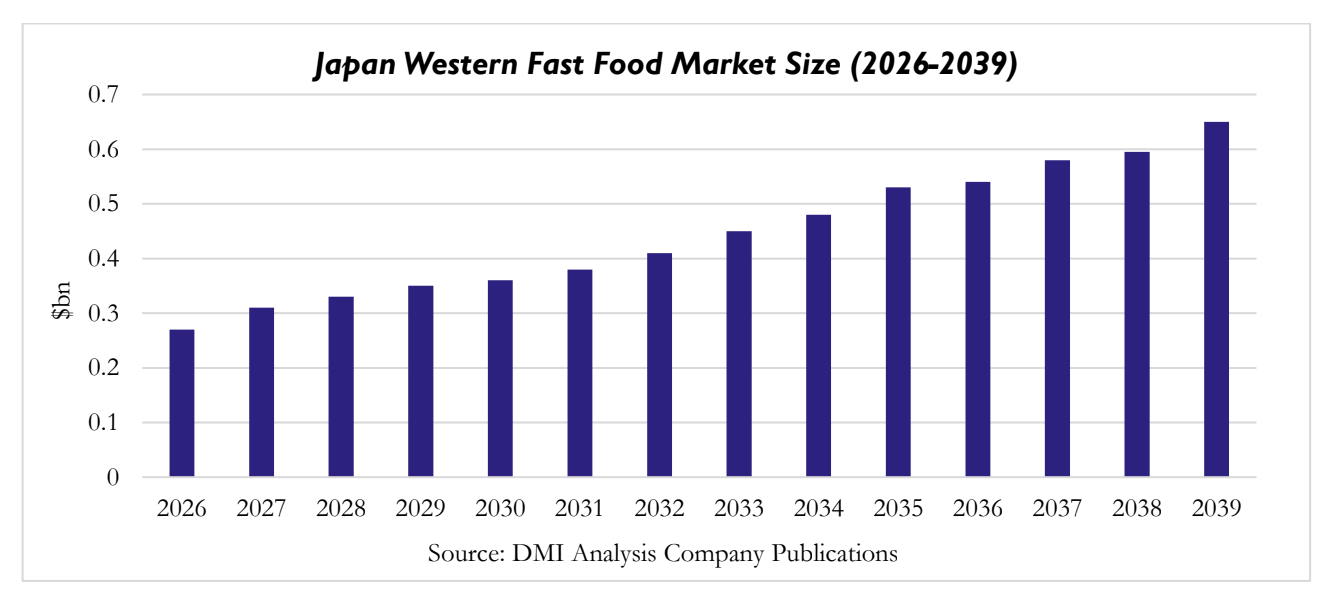
“Food can be globalized, but at the same time, it needs to be local”, as Carlyle executive Takaomi Tomioka observed. Japan’s fast food sector embodies this tension. Forecasts suggest that Japan’s fast food market will nearly double to $104.1bn by 2033 from $58.6bn in 2024 (Imarc Group).
However, a lot of the future growth of the fast food sector in Japan lies in the balance between fiscal discipline and quality expectations that define the Japanese consumer market. The outlook is strong, and as investors deploy capital into established brands, the sector is likely to see continued expansion, innovation, and consolidation in the years ahead.



0 Comments